Where are the best areas to buy land around Butwal and Tilottama for future investment?
Growth follows the highway, the airport and new services. Lanes behind the highway and Tilottama's new wards suit a 10-year hold, if the papers are clean.

Khadak Thapa · Co-Founder & CEO, MeroBhumi
·7 min read
The short answer
There is no secret area, but there is a clear pattern: land around Butwal and Tilottama rises first along widening roads, then in wards that receive drainage, water and street lighting, and last on converted farmland. For a ten-year hold, the lanes just behind the main highway and Tilottama's expanding residential wards offer the best balance of access and price, while northern Butwal suits buyers who want higher ground. Whichever area you choose, buy where the road is already built or funded, and check flooding, land classification and the mapped road before you pay.
Buyers in Rupandehi often ask the same question. Where should I buy land today if I want it to be worth much more in ten years? There is no secret area that only insiders know. There is, however, a clear pattern in how this region grows.
This guide is about where growth is heading and how to choose a plot to hold. If you want to know what decides the rate on a plot today and how to check it, read our companion guide on land price in Butwal, Tilottama and Bhairahawa.
How does growth move in the Butwal and Tilottama corridor?
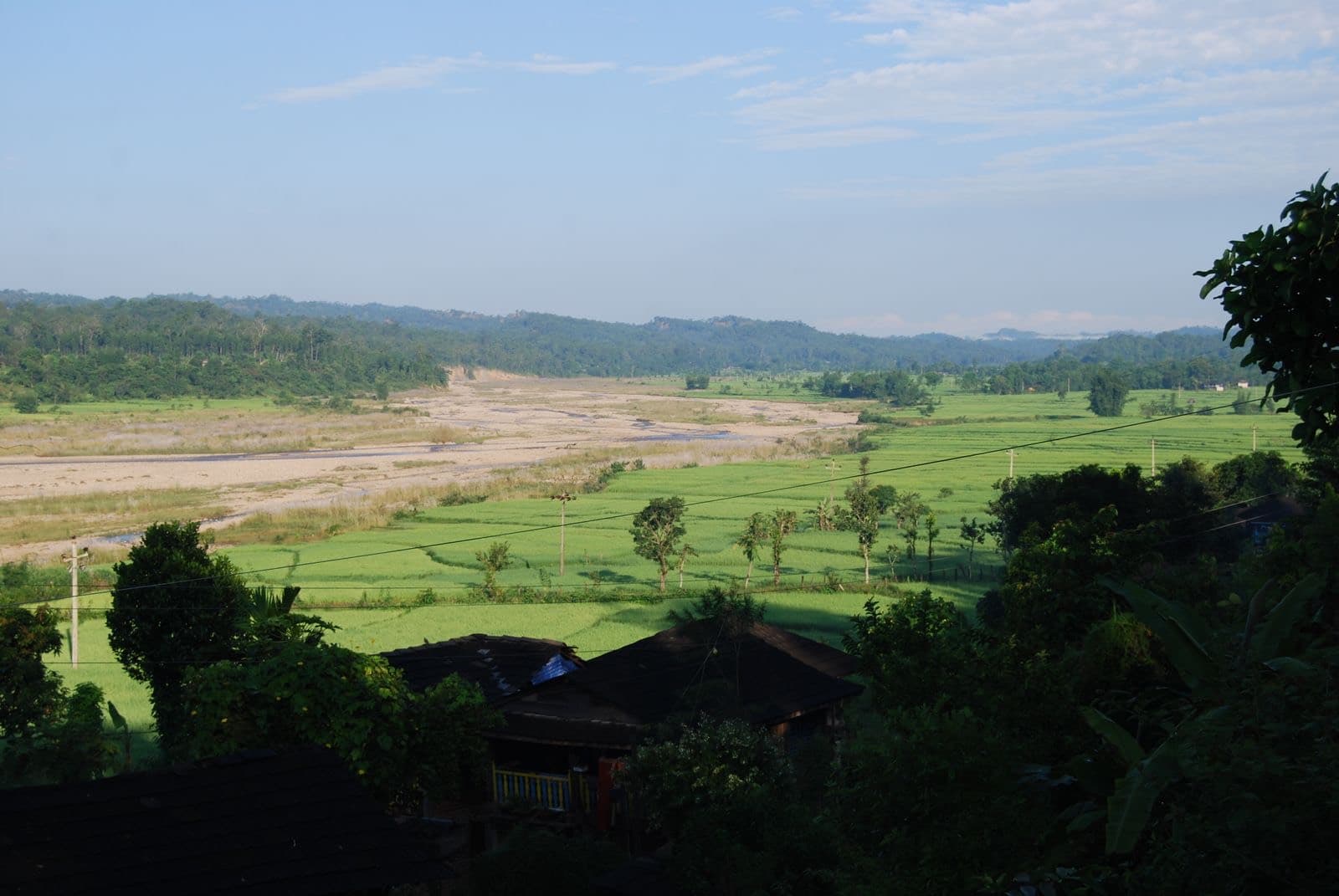
It follows three things: the highway, the airport, and the spread of services outward from the established chowks. Land close to a widening road usually rises first. Land in wards that receive drainage, water lines and street lighting rises next. Farmland that is being converted into housing plots rises last, but often from the lowest base.
If you can identify where these three forces are heading, you have already done most of the work. Ask the ward office (वडा कार्यालय) which roads are due to be widened or paved and which services are planned. Then look at where new houses, not just new plots, are going up.
Which areas suit which kind of investor?
Each part of the corridor rewards a different buyer. The table compares the five areas buyers ask about most, without prices, since rates change every few months.
| Area | Character | Best for | Main risk | What to check |
|---|---|---|---|---|
| Main highway frontage | Highest commercial value | Showrooms, godowns, workshops, mixed use | High entry cost; part of the frontage lost if the road is widened | The road's planned width at the municipality |
| Lanes just behind the highway | Same access, less noise and a lower price | Residential investors and future family homes | Narrow or unrecorded lanes | Lane width on the field map |
| Northern Butwal, towards Palpa | Higher ground, cooler air, quieter | Buyers who want a home site with low filling cost | Steep approach roads and slope | Slope, approach road, signs of slipping |
| Tilottama's expanding wards | Steady plotting on former farmland | Careful buyers looking for value | Agricultural classification | Land use category and municipal rules |
| Airport influence area | Linked to trade, hospitality and travel | Patient investors with no need to sell soon | Long quiet stretches with little movement | Your own time horizon, and who would buy from you |
Is land on the main highway a good investment?
For business, yes; for a family home, usually not. Plots with frontage on the main highway carry the highest commercial value. They suit showrooms, godowns, workshops and mixed use buildings. Entry cost is high, and these plots are usually bought for business rather than for family homes.
The lanes just behind the highway are more interesting for residential investors. They benefit from the same access without the noise and the price. Before buying highway frontage, ask the municipality how wide the road is planned to be. A widening can take a strip off the front of your plot, and that is the most valuable strip you own.
What should you know about northern Butwal and the hill road side?
It offers better ground but harder access. The areas stretching north from the city towards the Palpa road attract buyers who want cooler air, higher ground and a quieter setting. Ground level is generally better here, which reduces filling cost.
Check the slope and the approach road carefully, since access can be steep in places. Walk the road yourself, ideally after rain, and look at the cuttings above and below the plot for signs of slipping. You can see what is on the market now in land for sale in Butwal.
Why do careful buyers look at Tilottama's new wards?
Because this is where value is still being created. Tilottama has absorbed much of the region's residential growth. Areas around the older settlements and along the connecting roads between Butwal and Bhairahawa have seen steady plotting activity.
This is where careful buyers find value. Many plots here are recently converted from farmland, so confirm the land classification and the municipal rules before you plan a house. Compare current plots in our Tilottama land listings.
Is land near the airport worth holding?
Only if you can wait. Land within reach of the international airport has drawn investor attention for several years. Demand here is linked to trade, hospitality and travel activity. It rewards patience, and it can be quiet for long stretches.
Which risks do buyers underestimate here?
Three risks matter most in this region, and every one of them can be checked before you buy. The table shows how.
| Risk | Where it shows up | How to check it |
|---|---|---|
| Flooding and low ground | Near river channels and in older paddy areas | Visit in the monsoon, compare the plot level with the road, ask neighbours about past floods |
| Agricultural classification | Farmland recently cut into housing plots | Ask the municipality what can be built on the plot's land use category |
| A road that exists only in practice | New plotting areas and private lanes | Get the field map, or naksa (नक्सा), from the Survey Office (नापी कार्यालय) and confirm the road is drawn on it |
Also confirm that the plot is ordinary private land, not Guthi (गुठी) or Ailani (ऐलानी) land. Both carry restrictions that can stop a sale or a loan, and the record at the Land Revenue Office, or Malpot (मालपोत कार्यालय), will show which it is.
How do you choose a plot for a ten-year hold?
Follow the road, the ground and the neighbours, in that order. These rules have served buyers in this corridor well.
- Buy where the road is already built or already funded, not where a road is only rumoured.
- Prefer plots with a wide, recorded access road, even if the plot itself is smaller.
- Check the ground level in the monsoon rather than in the dry season.
- Look at what the neighbours are building, because that tells you where the ward is heading.
- Choose a regular shape with a usable frontage, which is easier to build on or sell later.
- Budget for a boundary wall, since land you do not visit often can be encroached upon.
Finally, hold long enough. Land in this corridor has rewarded people who waited through slow years, not those who bought and sold within a season. If you are still deciding between a plot and a built house, our guide to house or land as an investment sets out the trade-offs.
What does holding land for ten years involve?
Less work than a house, but not none. Pay the land revenue every year at the Malpot office and keep each tax receipt, or tiro rasid (तिरो रसिद). Visit the plot regularly, photograph the boundary marks, and get to know the neighbours, who will tell you if anyone starts using your land.
Why does the paperwork matter as much as the location?
Because the best location in Rupandehi is worthless with an unclear Lalpurja (लालपुर्जा). Verify ownership, check for mortgages and holds, and confirm the boundaries against the survey map at the Malpot office. Our guide on how to check a Lalpurja explains each step.
MeroBhumi is based in this region and follows these wards closely. Listings marked verified have had their ownership documents reviewed by our team. It is a strong first check, not a replacement for your own visit to the Malpot office. If you cannot find the right plot, post what you need on our free property demands board and let sellers come to you.
Frequently asked questions
Which area around Butwal is best for long-term land investment?
For most residential investors, the lanes just behind the main highway and Tilottama's expanding wards offer the best balance of access and price. Highway frontage suits business use, and the airport area suits only patient investors.
Does land rise first near new roads?
Usually. Land close to a widening road tends to rise first, then land in wards that receive drainage, water and street lighting, and converted farmland last, though often from the lowest base.
Is converted farmland in Tilottama safe to buy?
It can be, but confirm the land classification and the municipal building rules first, because agricultural classification can restrict what you build.
When should I visit a plot before buying?
Visit in the monsoon if you can. Ground level and drainage problems near river channels and old paddy areas only show clearly in the rainy season.
How long should I hold land in this corridor?
Plan for around ten years. The corridor has rewarded people who waited through slow years, not those who bought and sold within a season.
Find land to hold in Tilottama and Butwal
Compare plots across Tilottama's growing wards, with location details and verified documents where marked.
Browse Tilottama landGet new guides and verified listings by email
One email when there is something worth reading. Unsubscribe any time.
No spam. Unsubscribe with one click.
Keep reading.
All guides
Land price in Butwal, Tilottama and Bhairahawa: what decides it, and how do you check a fair rate?
Land price here follows road width, distance from a chowk, ground level, plot shape and services. Compare three plots and the ward valuation before paying.
House or land: which is a better investment in Nepal?
Land suits buyers who can wait ten years and need no income. A house suits those who want rent or a home now. Location and paperwork matter most.

How do you check a Lalpurja before buying land in Nepal?
Match the Lalpurja to the seller's citizenship, confirm it at the Malpot office, compare the survey map, check tax receipts and see how the seller got it.